

How to Choose the Right OTDR for Multi-Mode Fiber Testing?

In the deployment and maintenance of fiber optic networks, an OTDR (Optical Time Domain Reflectometer) is undoubtedly the technician’s “sharpest eye.” However, compared to single-mode fiber testing, multi-mode fiber testing often comes with more misconceptions and technical nuances.
In this blog post, we will delve into the characteristics of multi-mode fiber, the working principles of multi-mode OTDR lasers, the truth behind using single-mode OTDRs for multi-mode fibers, and introduce a pioneering force in the optical communication testing industry.
What is Multi-Mode Fiber?
Multi-mode fiber (MMF) is named for its ability to propagate multiple modes of light simultaneously. Its defining characteristic is a larger core diameter (typically 50um or 62.5um, which makes it highly compatible with cost-effective LED or VCSEL (Vertical-Cavity Surface-Emitting Laser) light sources.
Based on bandwidth capabilities and transmission distances, multi-mode fiber is classified into five distinct grades:
- OM1: 62.5um core. Mostly used in legacy 100M/Gigabit LANs and is largely phased out today.
- OM2: 50um core. Supports Gigabit networks, though rarely deployed in new installations.
- OM3 / OM4: Laser-optimized 50um fiber. These serve as the mainstay for 10G / 40G / 100G high-speed transmissions in modern data centers and enterprise intranets.
- OM5: The latest Wideband Multi-Mode Fiber (WBMMF). Specifically designed for Shortwavelength Division Multiplexing (SWDM) to deliver higher bandwidth over a single multi-mode fiber.
Application Scenarios: Due to higher modal dispersion, multi-mode fiber is not suited for long-haul transmission. However, paired with low-cost optical transceivers, it remains the preferred choice for short-distance communications (less than 500 meters) inside data centers and between campus buildings.
Understanding Multi-Mode OTDR Lasers
Testing multi-mode fiber requires a dedicated, high-quality multi-mode OTDR laser.
A multi-mode OTDR integrates laser diodes that emit specific wavelengths, with the most common industry standards being 850nm and 1300nm.
- 850nm: Experiences higher attenuation but is highly sensitive to bending and connector losses, making it ideal for pinpointing close-range faults.
- 1300nm: Features lower attenuation, making it better for evaluating the overall condition of longer links.
Can You Test Multi-Mode Fiber with a Single-Mode OTDR?
A frequent question raised in the field is: “I only have a single-mode OTDR (1310/1550nm) on hand. Can I use it to test multi-mode fiber?”
The short answer: You can run the test, but the results will be completely inaccurate.
Why is this practice discouraged?
- Core Mismatch (Geometric Loss): Single-mode fiber has an ultra-fine core (approx. 9um, whereas multi-mode fiber has a core of 50um or 50um.
- Severe Injection Errors: When a single-mode laser is injected into a multi-mode fiber, the light only populates a small fraction of the multi-mode core center. This leads to extremely weak backscattered signals.
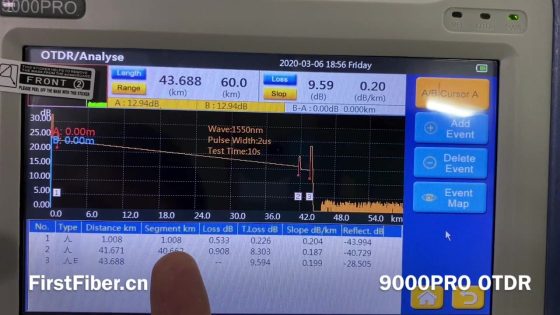
- Distorted Traces and Erroneous Readings: The resulting OTDR trace will be plagued with noise. Loss calculations at event points (such as splices and adapters) will be heavily distorted, and the unit may fail to capture reflection peaks entirely.
Using a single-mode OTDR on multi-mode fiber can, at best, give a crude indication of continuity or fiber breaks. If you need to deliver professional test reports or pass project acceptance, you must use a high-precision multi-mode OTDR with the correct corresponding wavelengths.
FirstFiber Technologies’ Multi-Mode OTDR Solution
In the optical communication test equipment market, because the demand for multi-mode lasers in the testing sector is relatively small compared to single-mode ones, many manufacturers focus their R&D and supply chains primarily on single-mode products. Consequently, most Chinese suppliers can only provide multi-mode OTDRs compatible with legacy OM1 fibers. When faced with the mainstream OM3, OM4, or the latest high-spec OM5 fibers found in modern data centers, these conventional instruments often fall short.
As an innovative leader in the industry, FirstFiber Technologies has successfully broken through this limitation!
Leveraging a robust self-developed optical platform and advanced algorithm optimizations, FirstFiber delivers multi-mode OTDRs fully compatible with the entire OM1, OM2, OM3, OM4, and OM5 lineup. Whether dealing with legacy 62.5um links or modern, ultra-high-bandwidth OM4/OM5 infrastructures in data centers, FirstFiber Technologies equipment provides exceptional accuracy, clear event maps, and international standard-compliant test reports.
Featured FirstFiber Technologies OTDRs Supporting Multi-Mode (MM) Testing
To accommodate various project scales and environments, FirstFiber Technologies integrates its comprehensive multi-mode capabilities across multiple flagship form factors.
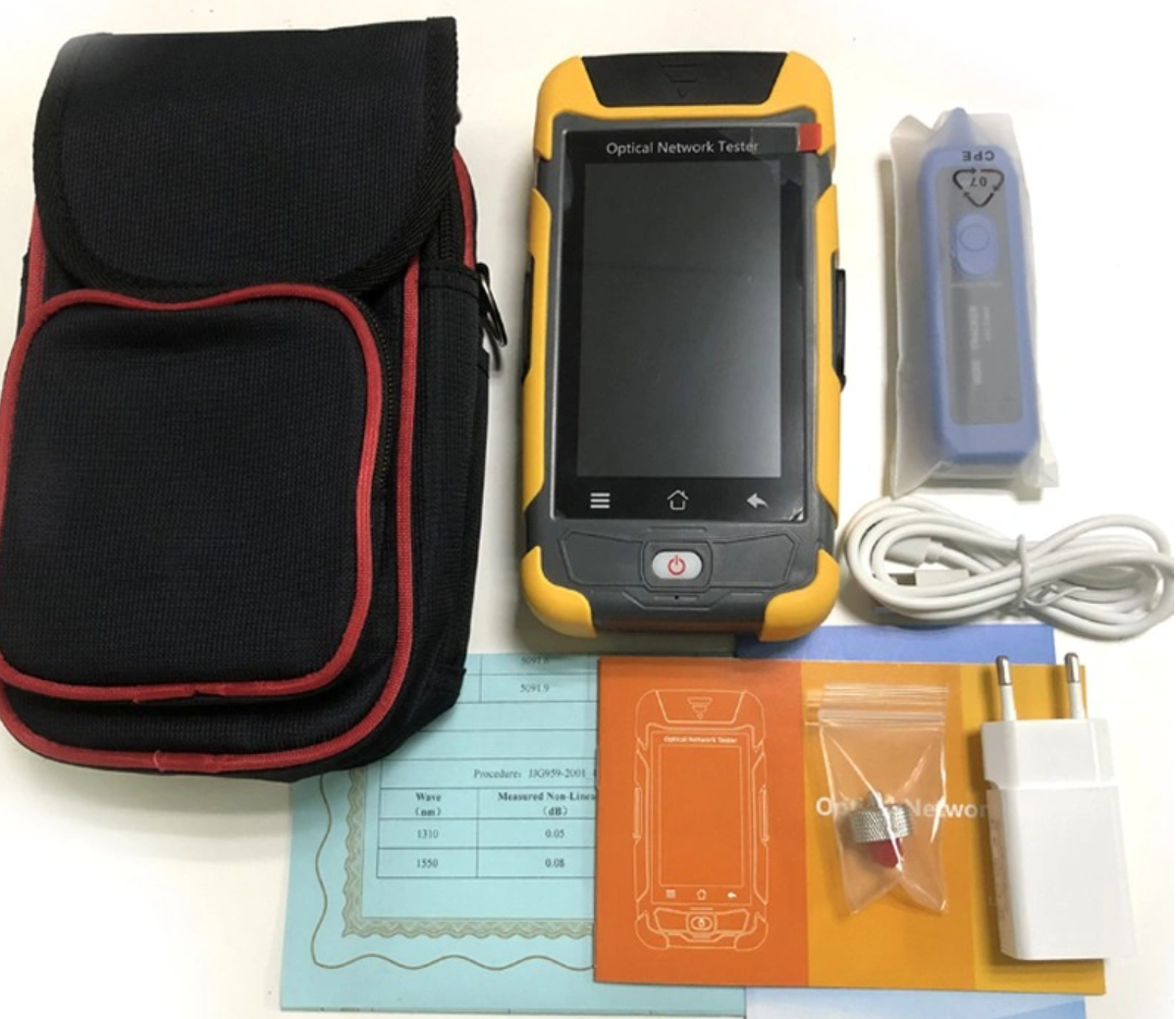
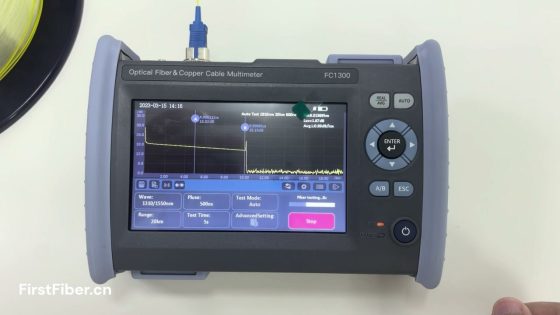
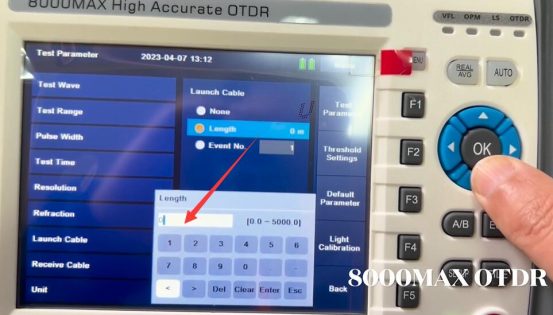
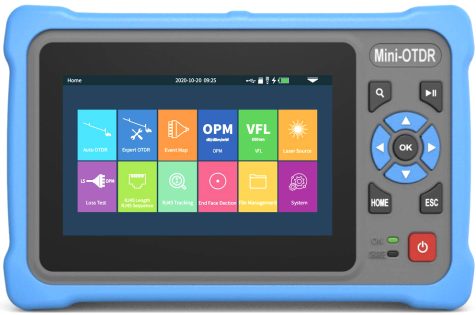
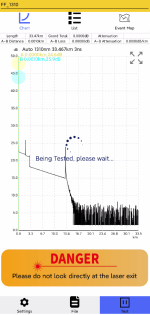
- 8000MAX Series (Quad-Wavelength/High-End) A premium 5.6-inch touchscreen platform capable of integrating 4 wavelengths for both single-mode and multi-mode testing (850/1300/1310/1550nm). Features intelligent Event Map software and up to 8 hours of battery life.
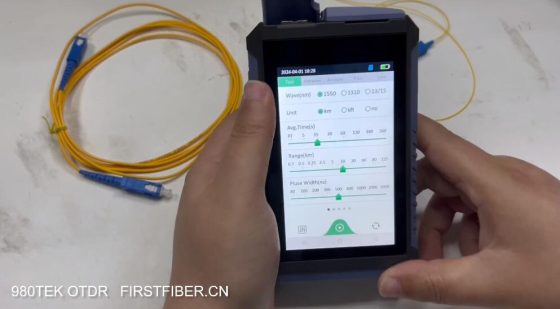
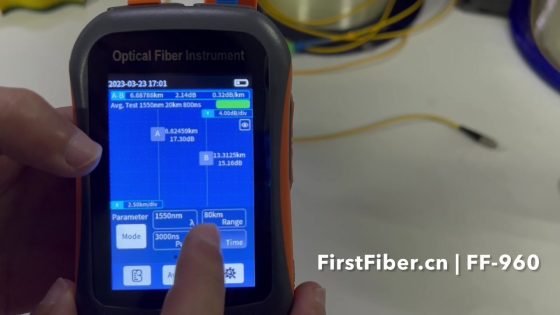
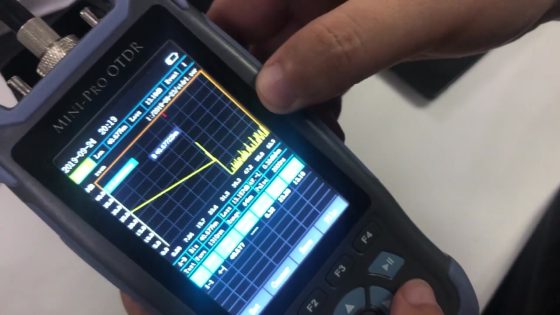
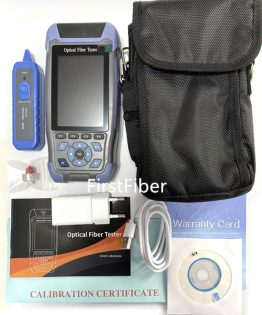
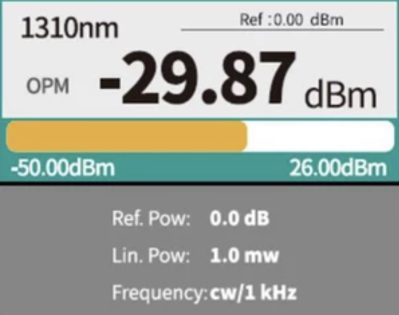
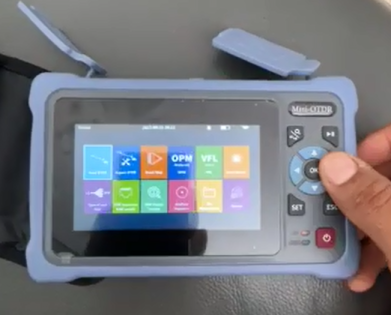
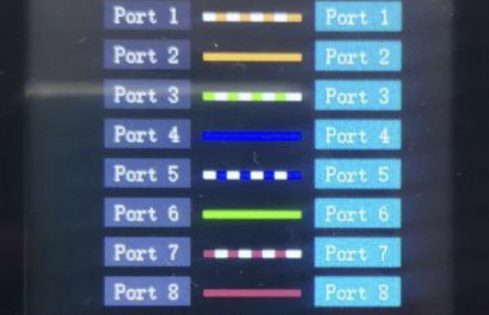
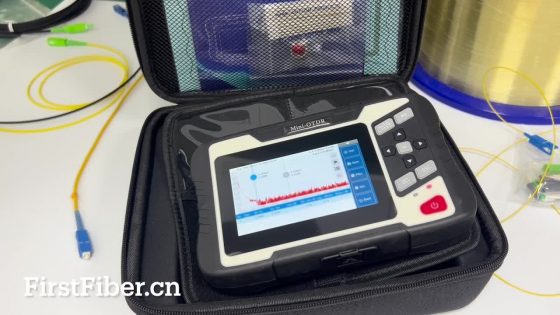
- 980EXP (Multi-Function) Highly versatile field units supporting 850/1300nm MM testing alongside built-in specialized network analysis tools like RJ45 trackers, OPM, VFL, and OLS.
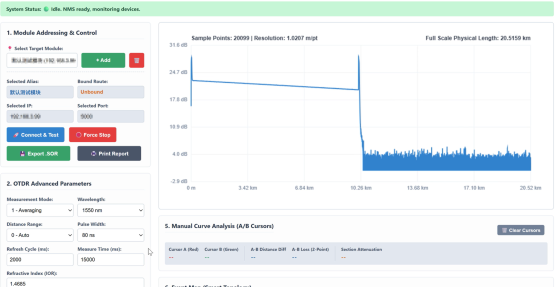
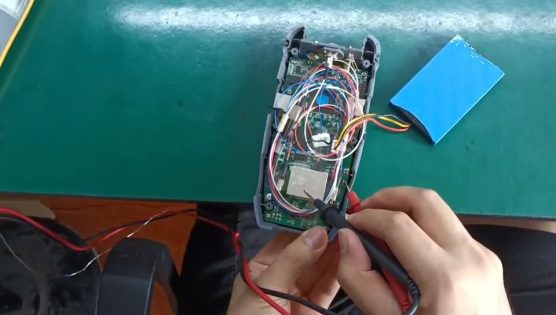
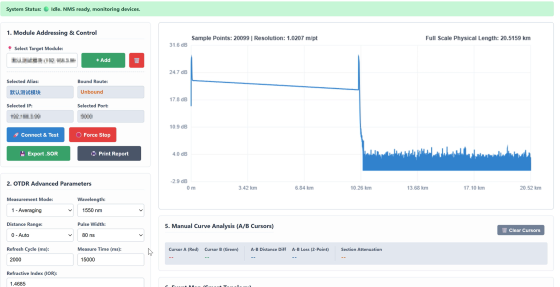
- FirstFiber Technologies Modular OTDR Engines Customizable TCP/IP network-controlled modules designed for secondary software development or deployment inside automated, continuous fiber infrastructure monitoring systems.
FirstFiber Technologies Custom Production Services (OEM/ODM)
Beyond leading technical specifications, as an OTDR manufacturer with proprietary core technologies, FirstFiber Technologies understands that clients across different regions and industries have highly diverse requirements for testing instruments.
To empower our global partners, FirstFiber Technologies offers professional customization services by extensive manufacturing expertise. Whether you are a brand owner, distributor, or enterprise client, you can tailor your test equipment to fit specific application scenarios:
Discover more customization details: Visit our official customization service page at FirstFiber Technolgies OTDR Customization to learn more about MOQs, custom workflows, and technical support.
Conclusion
If you are looking for a high-performance multi-mode testing solution or wish to customize an OTDR under your own brand, FirstFiber Technologies is your most reliable long-term partner. Feel free to leave your testing questions in the comments or contact us directly for professional technical support!

Comments are closed.